
Paris for me is Paris in the 1920s, through a lens of Woody Allen-level nostalgia, with A Moveable Feast never far from mind. So it probably comes as no surprise that I’ve made it a mission, trip after trip, to track down the secret passages of Paris — the history behind them, and an excuse to spend too much time over a café au lait with a crunchy pain au chocolat in hand.
These covered passages are a nostalgic glimpse into the city’s past, before shopping malls and convenience stores, when small boutiques and artisans weren’t just prized — they were the norm. The boom happened almost entirely in the first half of the 19th century: there were around 150 of these passageways across Paris by 1850, and as many as 183 at their peak in 1867. Most were later demolished, first as Baron Haussmann’s renovations reshaped the city from the 1850s onward, and then as department stores like Le Bon Marché drew shoppers away from the smaller boutiques inside them. Today, somewhere between 20 and 25 survive, almost all on the Right Bank.
This guide covers ten of my favourites still standing, in the hope you’ll see Paris through the same golden-days lens I do.

1. Galerie Vivienne
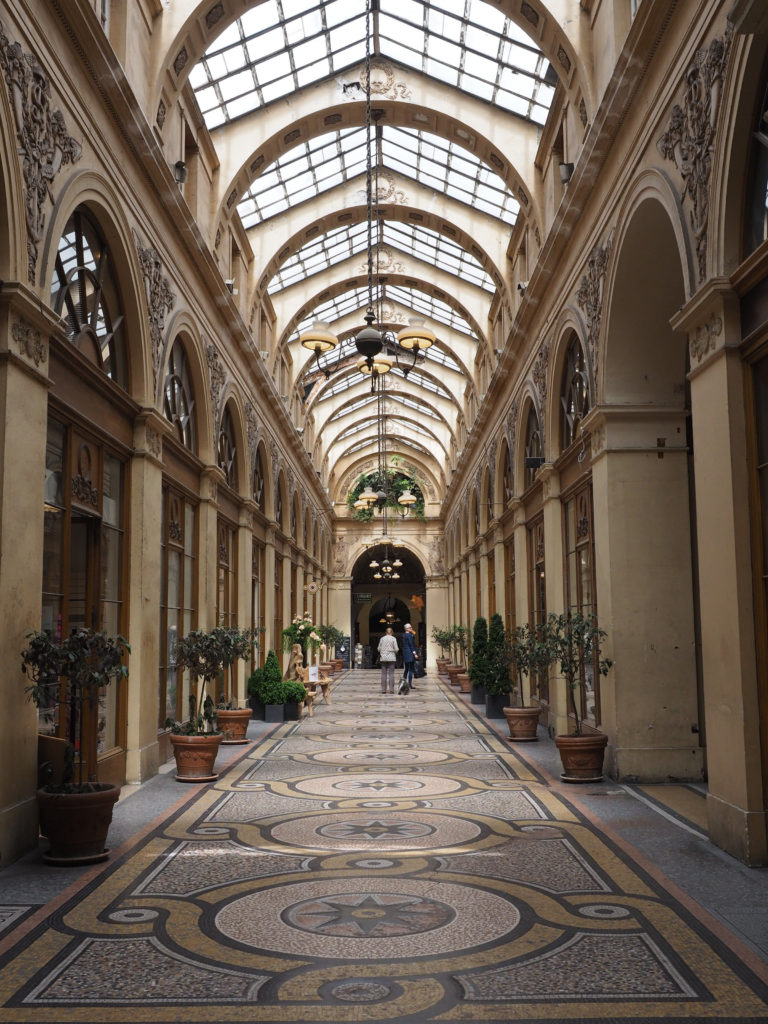
My favourite passageway, and I’d argue the most glamorous still standing today. Galerie Vivienne is a popular pitstop for locals and their miniature pooches, hunting for artisan goods in the heart of the 2nd arrondissement. Built in 1826 and located right by the Palais Royal, it’s an almost perfect display of polished wood, natural light, and wrought iron.
4 Rue des Petits Champs, 2nd arrondisement
2. Passage des Panoramas
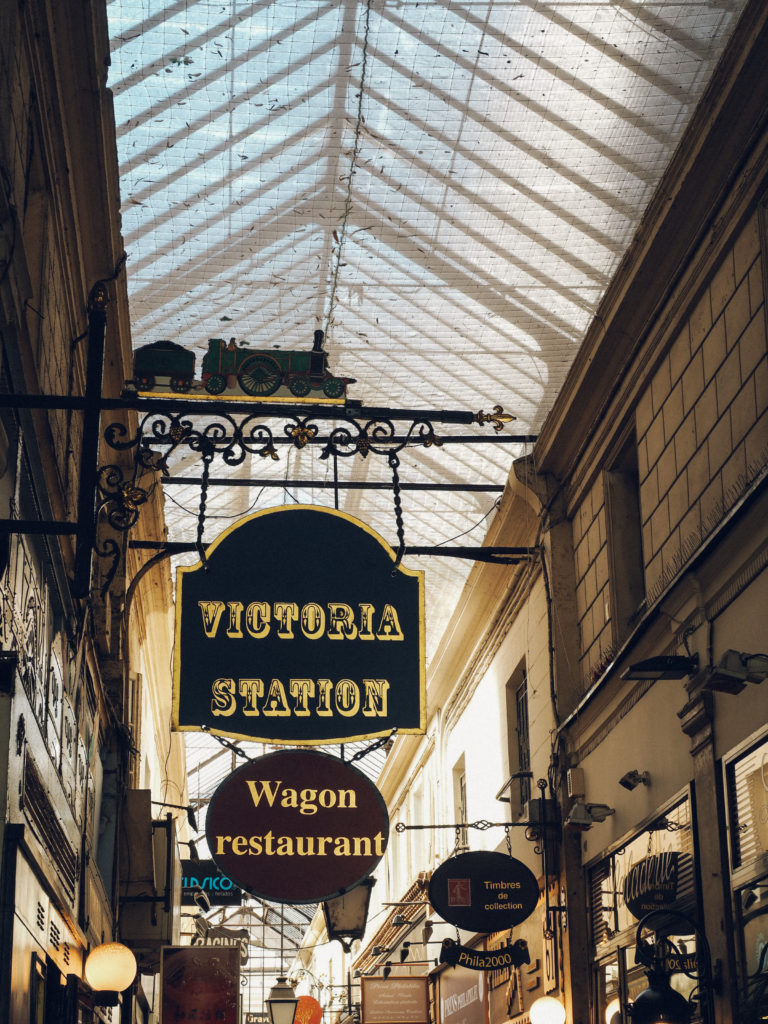
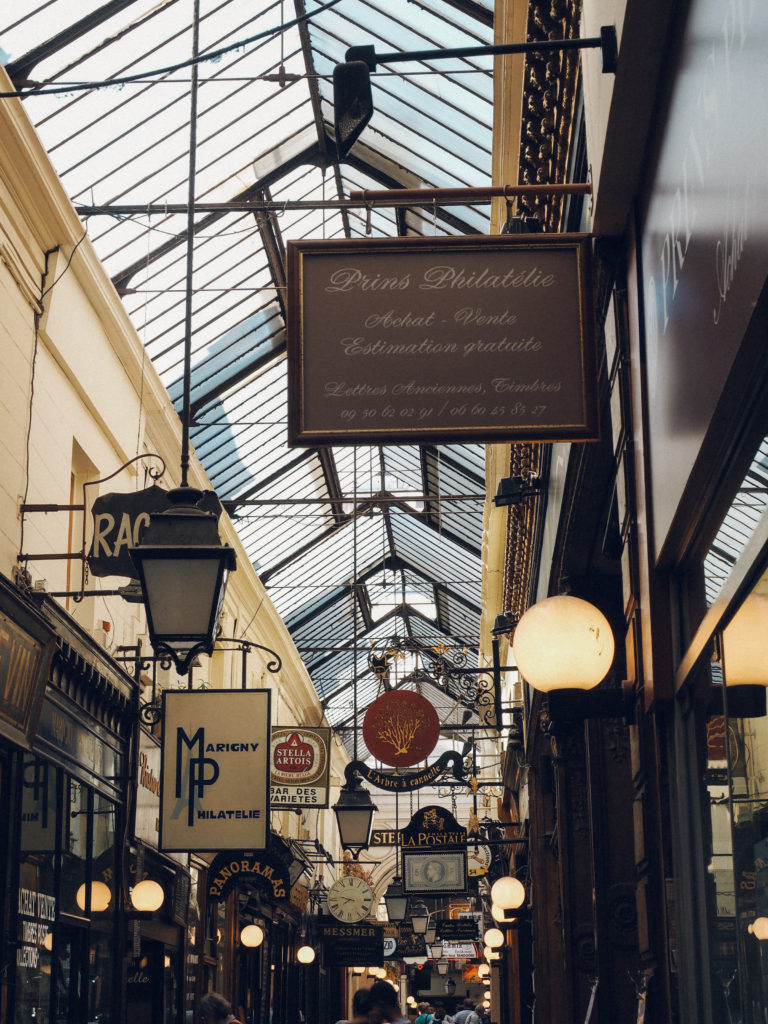
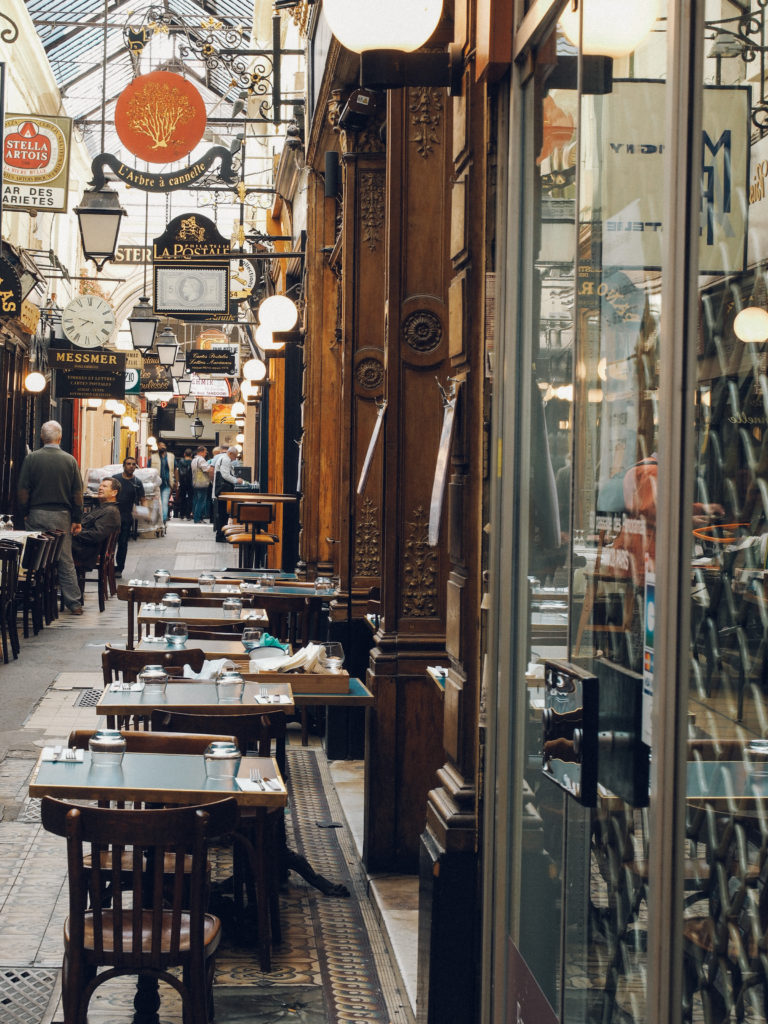
With antique signage laced in gold foil and a train-themed restaurant that feels like something out of the Hogwarts Express, Passage des Panoramas is a close second favourite of mine, if only for how much it reminds me of Diagon Alley (yes, hopelessly devoted fan over here). Dating to 1799, it’s the oldest surviving passage in Paris, and one of my favourite spots in the whole city for a nostalgic afternoon — bring company and settle in for a long, unhurried lunch.
11 Boulevard Montmartre, 2nd arrondisement
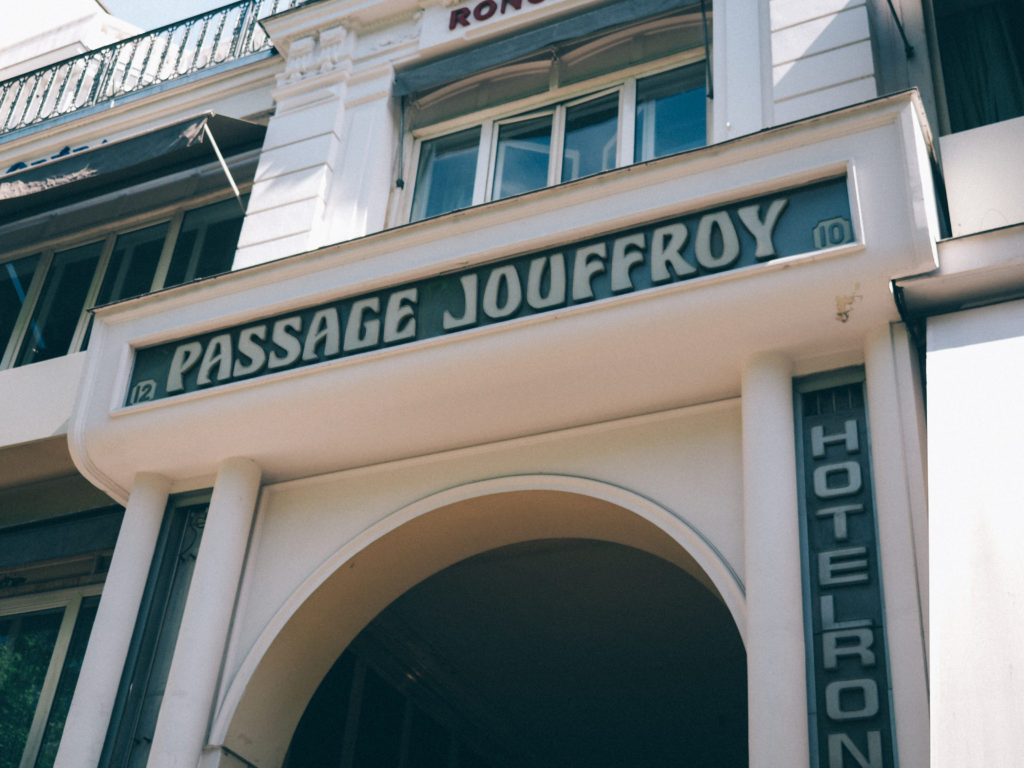
3. Passage Jouffroy
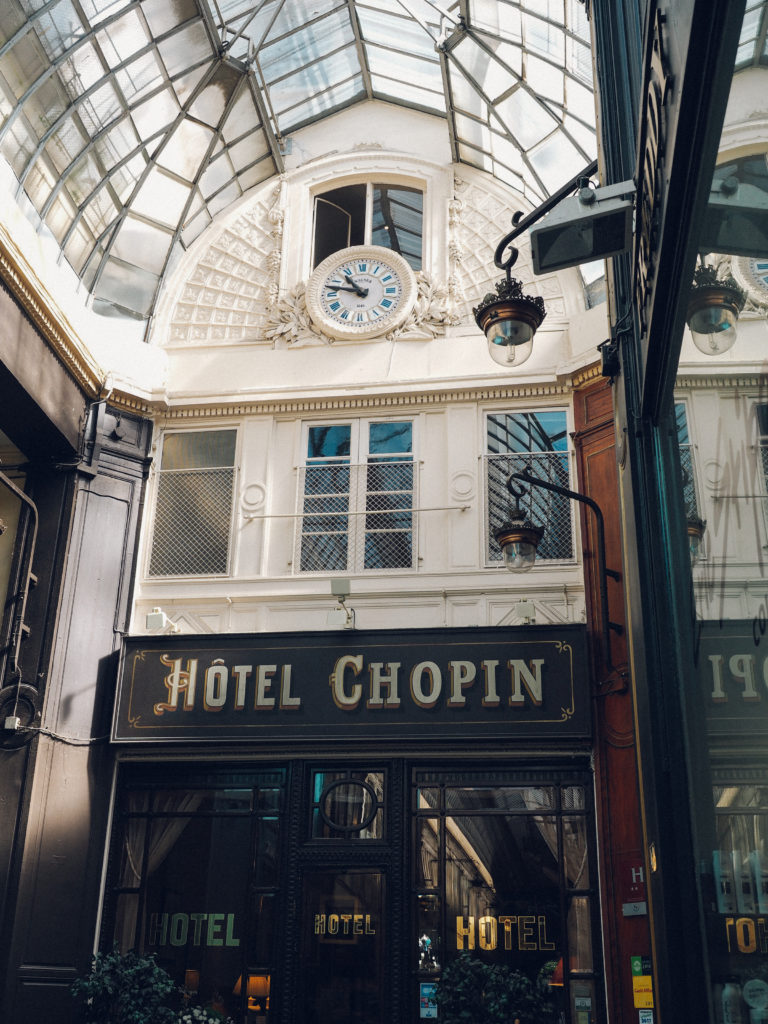
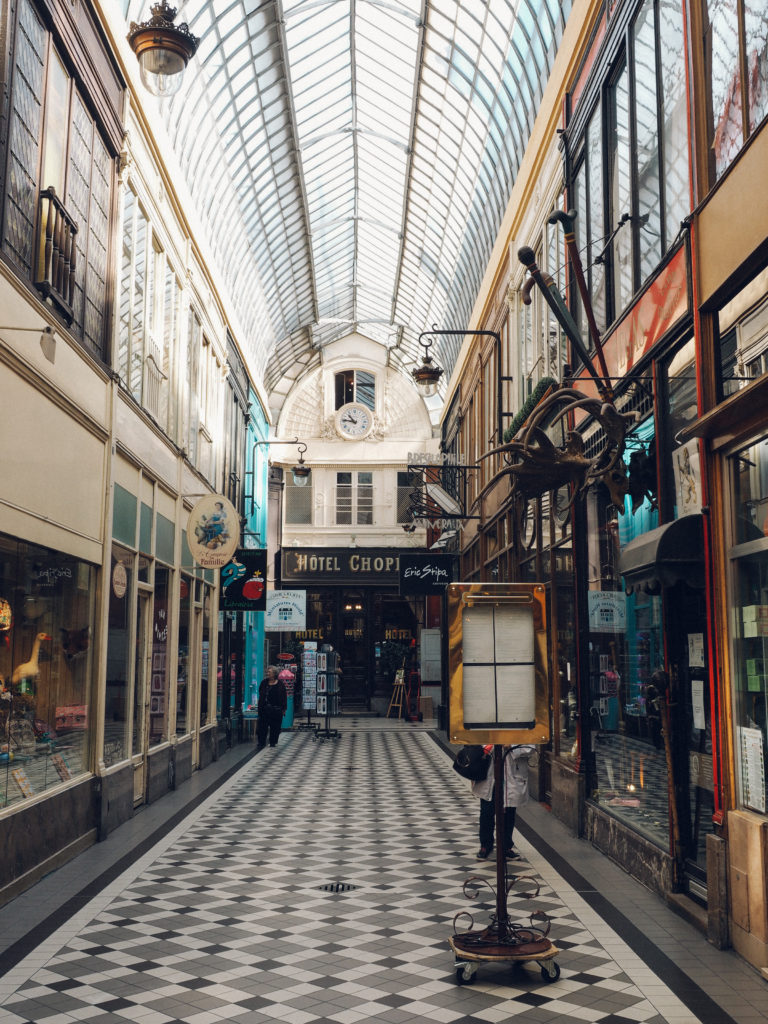
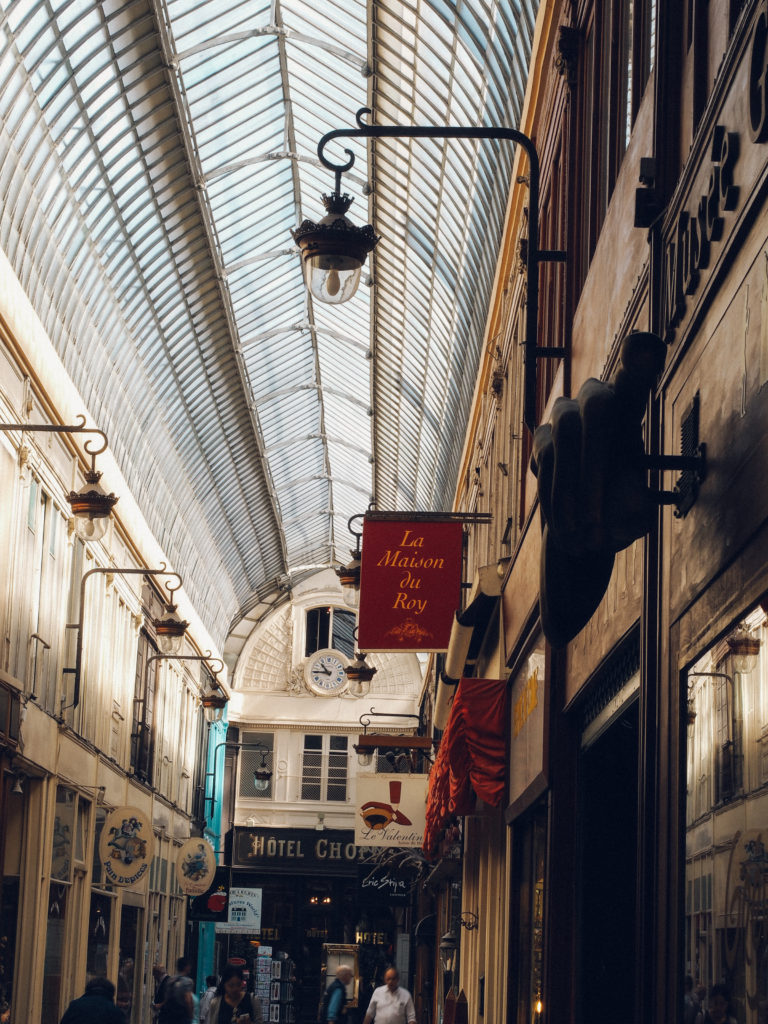
My third favourite passage in Paris sits in the 9th arrondissement, directly opposite Passage des Panoramas across Boulevard Montmartre — two separate arrondissements, facing one another on the same street. Built in 1845–46, it’s one of the first Parisian passages constructed entirely from metal and glass, and it ends at a cute boutique hotel that feels plucked straight from the 1920s.
10 Boulevard Montmartre Boulevard, 9th arrondisement

4. Galerie Vero-Dodat
I stumbled on Galerie Véro-Dodat by chance, wandering near the Louvre in search of something to eat. Built in 1826, it’s one of the quieter passages in Paris, which makes it a great, uncrowded spot for a photo of its iconic black-and-white chequered marble floor.
19 Galerie Vero-Dodat, 1st arrondisement
5. Galerie Colbert
Right next door to Galerie Vivienne, and easy to miss because of it, Galerie Colbert dates to the same year, 1826. It’s now managed by France’s national heritage institute rather than run as boutiques, so it’s quieter and more museum-like, but the domed glass rotunda at its centre is worth the detour on its own.
6 Rue des Petits Champs, 2nd arrondissement
6. Passage Choiseul
One of the longest of the surviving passages, built in 1827, Passage Choiseul has a literary claim to fame: the writer Louis-Ferdinand Céline grew up around here and wrote about the passage in his novels. It’s a working, slightly scruffy arcade today, less polished than Vivienne but full of character.
40 Rue des Petits Champs, 2nd arrondissement
7. Passage du Grand-Cerf
Built in 1825 and boasting the tallest glass roof of any surviving Paris passage, Passage du Grand-Cerf has leaned into design and concept stores rather than antiques, making it feel distinctly more modern than its neighbours. It’s also one of the quietest, so it’s a good choice if you want photos without other people in them.
145 Rue Saint-Denis, 2nd arrondissement
8. Passage Brady
Known today as “Little India,” Passage Brady in the 10th arrondissement has been the centre of Paris’s Indian and Pakistani community since the 1970s, lined with curry houses, grocers, and sari shops. Built in 1828, it’s the passage that looks least like the others on this list, and that’s exactly the point.
46 Rue du Faubourg Saint-Denis, 10th arrondissement
9. Passage du Caire
Alongside Passage des Panoramas, this is the oldest surviving passage in Paris, dating to 1799. Its Egyptian-themed facade, complete with carved pharaoh heads, was inspired by Napoleon’s Egyptian campaign of the same year. It’s historically been the centre of Paris’s garment district, so expect wholesale fabric and clothing shops rather than boutiques.
2 Place du Caire, 2nd arrondissement
10. Passage des Princes
The newest of the passages on this list, rebuilt in the 1990s on the site of a much older 1860 arcade, Passage des Princes has become known for its toy shops, making it a fun stop if you’re travelling with kids. It’s tucked just around the corner from Rue de Richelieu.
97 Rue de Richelieu, 2nd arrondissement
Practical tips for visiting
Most of these passages are gated and close in the evening, generally by 8 or 9pm, and some of the smaller boutiques inside close on Sundays — visit during the day if you want to see them at their best. They’re free to walk through, but many contain working shops, cafés, and restaurants, so it’s worth timing a visit around a coffee or lunch stop in one of them.
FAQ
How many covered passages are left in Paris? Somewhere between 20 and 25, depending on how strictly you define a “passage” — most are concentrated in the 2nd, 9th, and 10th arrondissements on the Right Bank.
Are Paris’s passages free to visit? Yes, all of them are open to the public to walk through free of charge, though they operate on their own opening hours and typically close in the evening.
What’s the oldest covered passage in Paris? Passage du Caire and Passage des Panoramas are tied for the oldest, both dating to 1799.
Is Galerie Vivienne or Galerie Colbert better to visit? Galerie Vivienne has more shops, cafés, and general atmosphere; Galerie Colbert next door is quieter and worth a quick look for its glass rotunda if you’re already in the area.
PIN IT!
Over to you!
Have you visited more of the secret passages of Paris? Which was your favourite?

Brooke Saward founded World of Wanderlust as a place to share inspiration from her travels and to inspire others to see our world. She now divides her time between adventures abroad and adventures in the kitchen, with a particular weakness for French pastries.
